Forex for beginners, a practical start without the noise
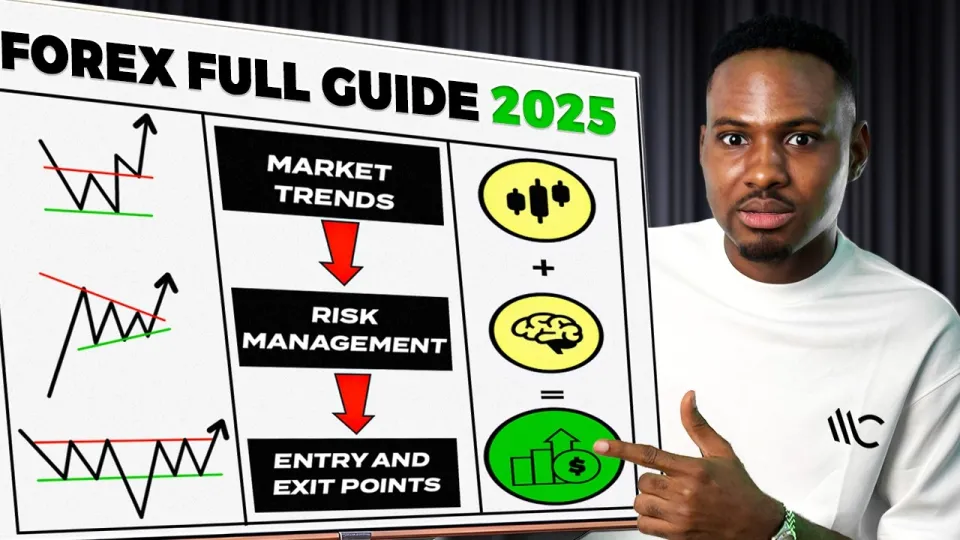
Video: How To Start Forex Trading For Beginners’ 2025 (Full Course)
Need articles like this for your video? They help promote it on YouTube and Google — order them in the Telegram bot @sat_sit_bot. Articles with your video embedded are written and posted by the bot itself — on popular topical sites (no ads). Free trial — 50 articles.
· based on the channel Jeffrey Benson Forex
Key takeaways
- Forex is a decentralized over-the-counter market where currencies trade in pairs; there is no single exchange.
- The market runs 24 hours a day, five days a week, split into four main sessions: Sydney, Tokyo, London and New York.
- A trading platform such as MetaTrader 5 connects you to a broker and lets you place orders, set stop-loss and take-profit levels.
- Risk management starts with risking a small fixed percentage of the account per trade and using a stop-loss on every position.
- Beginners should practice on a demo account before funding a live account with real money.
Forex is the global market for exchanging national currencies, and starting as a beginner means learning the mechanics, choosing a broker and platform, and practising risk control before risking real money. The free full course from Jeffrey Benson Forex walks through the same ground, and the author offers a student programme at firepipsfx.com/plans for those who want structured guidance. This article explains the essentials in plain terms so you can begin without confusion.
What forex trading actually is
Forex trading is the act of buying one currency while selling another, expressed as a currency pair such as EUR/USD. The first currency is the base and the second is the quote; the price tells you how much of the quote currency is needed to buy one unit of the base. When you go long, you expect the base to strengthen; when you go short, you expect it to weaken. Unlike stocks, there is no central exchange: forex is an over-the-counter market where banks, institutions and retail brokers trade through electronic networks. The most liquid pairs are the majors — EUR/USD, USD/JPY, GBP/USD and USD/CHF — and they typically have tighter spreads than exotic pairs. Leverage is common in retail forex, and it magnifies both gains and losses, which is why position sizing matters from the first trade.
How the forex market works
The forex market operates 24 hours a day from Monday to Friday, moving through four main sessions: Sydney, Tokyo, London and New York. Liquidity and volatility change with each session, and the overlap between London and New York is usually the busiest window. Prices are quoted with a bid and an ask; the difference is the spread, which is a cost you pay on entry. Most retail brokers are market makers or use a straight-through processing model, and they may charge a commission in addition to the spread on raw-spread accounts. Economic data — interest rate decisions, inflation reports, employment numbers — moves currencies because it shifts expectations for central bank policy. You do not need to predict every move; you need a repeatable process for deciding when to enter, where to exit and how much to risk.
Tools you need before your first trade
A beginner needs four things: a regulated broker, a trading platform, a demo account and a trading journal. MetaTrader 5 is a common platform that connects to your broker, shows charts and lets you place market, limit and stop orders. When choosing a broker, check regulation, spreads, commissions, minimum deposit and withdrawal methods; the course author recommends a specific broker, but you should verify the details yourself. A demo account lets you practise order placement and risk management without real money, and it is the right place to test a strategy for at least a few weeks. A journal records each trade's setup, outcome and emotional state, which turns experience into feedback. For signals and trade ideas, the author shares a free daily signal channel at t.me/firepipsignals.
A basic strategy foundation for beginners
A simple strategy starts with a clear rule for direction, a rule for entry and a rule for exit, and it should be tested before money is involved. Many beginners use support and resistance, trendlines or moving averages to define direction, then wait for price to reach a level where the reward is at least twice the risk. The stop-loss goes beyond the level that would prove the idea wrong, and the take-profit is set at a logical target such as the next resistance zone. Position size is calculated from the distance to the stop-loss and the percentage of the account you are willing to risk — for example, risking 0.5% to 1% per trade. Keep the strategy simple enough to follow consistently; complexity does not guarantee better results.
Placing your first trade step by step
Placing a first trade is a mechanical process: open the platform, select the pair, choose the order type, set the stop-loss and take-profit, and confirm the size. On MetaTrader 5, you can right-click a chart, select New Order, enter the volume in lots, and set stop-loss and take-profit levels in the order window before pressing Buy or Sell. Check the spread and the margin required before confirming; a wide spread on a small account can eat into the edge. After the order is filled, the position appears in the Trade tab, and you can modify or close it from there. Start with the smallest size your broker allows, and treat the first ten trades as practice even if the account is live.
Common mistakes to avoid
Overleveraging is the most common beginner error: trading too large a position relative to the account turns a normal losing streak into a wipeout. Another mistake is trading without a stop-loss, which leaves the account exposed to an unlimited loss on a leveraged position. Revenge trading after a loss, moving the stop-loss further away to avoid being stopped out, and jumping between strategies before testing any of them all lead to the same result — inconsistent decisions. Beginners also underestimate the cost of spreads and commissions, which compound over many trades. Finally, following signals without understanding the logic behind them makes it impossible to manage the trade when conditions change.
Questions beginners ask most
The questions that come up most often are about time, money and confidence. Many ask how long it takes to become profitable; the honest answer is that it depends on how deliberately you practise, and months of demo trading are normal before consistency appears. Others worry that forex is a scam — it is a regulated market in many jurisdictions, but the retail broker you choose matters, so verify its licence and withdrawal terms. Some viewers note that writing notes during lessons helps the material stick, especially the four market sessions, and that is a practical habit worth copying. A common concern is the fear of losing money; the way to reduce it is to risk only what you can afford to lose and to measure results over a series of trades, not a single one. The course author also runs a premium signal group at t.me/jeffreybenzhelpbot for those who want to follow trades while learning.
Useful links
- Student programme and courses: firepipsfx.com/plans
- Free daily signal channel: t.me/firepipsignals
- Broker registration recommended in the course: my.assexmarkets.com/auth/register?partner_code=1699134
- Premium signal group: t.me/jeffreybenzhelpbot
Final thoughts
Forex for beginners is learnable when the focus stays on process rather than prediction: understand the pair, control the risk, and practise on a demo account until the routine is automatic. The full course from Jeffrey Benson Forex covers the same foundation in video form, and the student programme at firepipsfx.com/plans is the author's route for those who want to go further. Treat every trade as data, keep a journal, and do not let a single outcome define your approach. The market will still be there tomorrow; your capital should be too.
Source: How To Start Forex Trading For Beginners’ 2025 (Full Course) · Markdown version
Questions & answers
How much money do I need to start forex trading?
You can open many broker accounts with a small minimum deposit, but the amount should be money you can afford to lose. A practical approach is to start with an amount that lets you risk 0.5% to 1% per trade without breaking the broker's minimum lot size. Demo trading costs nothing and should come first.
Is forex trading a scam?
Forex itself is a legitimate global market, but the retail broker you choose determines whether your experience is fair. Check regulation, read withdrawal terms and test customer support before funding an account. Avoid anyone who promises guaranteed returns.
How long does it take to become profitable?
There is no fixed timeline, and results depend on how deliberately you practise. Many beginners spend several months on a demo account before they can follow a strategy consistently. Measuring results over a series of trades, not one or two, gives a clearer picture.
Can I copy someone else's trades instead of learning?
Copying signals can be a way to observe how trades are managed, but it does not replace understanding risk. If you follow signals, still set your own position size and stop-loss. The course author offers a free signal channel and a premium group, but the educational material remains the foundation.